1. The 5 Golden Standards for Evaluating Sea Buckthorn in India
When Indian consumers ask "Which company sea buckthorn is best?", marketing claims frequently obscure the underlying biochemical truth. Health practitioners judge products on five objective clinical criteria:
Standard 1: Extraction Temperature (Sub-40°C vs Pasteurization)
Omega-7 (Palmitoleic acid) and natural bio-Vitamin C degrade rapidly when exposed to temperatures exceeding 45°C. Commercial bottling facilities routinely boil juices at 140°C–180°C for shelf life, destroying the active enzymatic potency.
Standard 2: Form Factor (Pure Capsules vs 80% Water Juices)
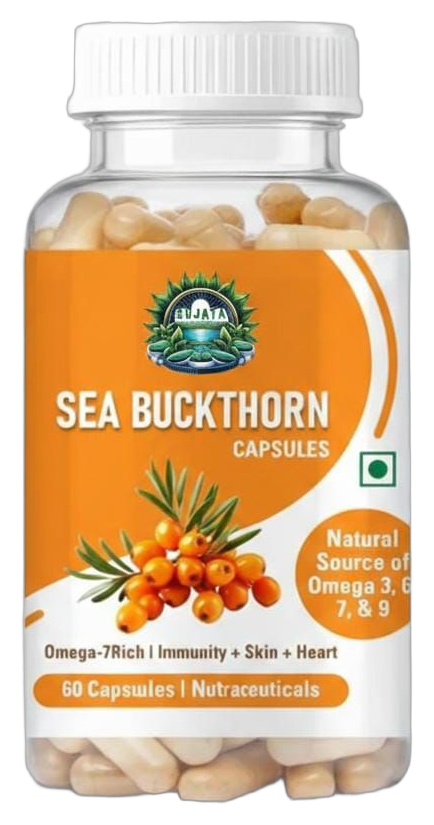
Bottled syrups and juices are 70% to 80% diluted water with high levels of citric acid, flavor enhancers, and sodium benzoate (E211). In contrast, cold-pressed vegetarian capsules deliver 100% active berry oil and pulp without gastrointestinal irritation.
Standard 3: Zero Added Sugars or Artificial Sweeteners
Sea buckthorn berries are naturally tart. Juices frequently add sugar or artificial syrups to make them palatable, defeating the purpose for diabetic or metabolic wellness customers. Pure capsules contain 0g sugar.
Standard 4: Independent NABL Heavy Metal Verification
Soil and water quality in the Himalayas vary. Only brands that publish independent ICP-MS test certificates confirming Lead (Pb) < 0.01 ppm, Mercury NIL, and Arsenic < 0.01 ppm can guarantee lifetime daily safety.
Standard 5: Sustainable High-Altitude Ladakh Harvesting
Commercial farm-grown berries lack the extreme altitude stress that stimulates massive Omega-7 synthesis. Genuine wild berries harvested at 12,000+ feet in Ladakh have up to 4x higher bioactive concentration.